Wafer Industry Overview
In 2023, the global wafer market reached USD 14.7 billion, and it is expected to reach USD 19.2 billion by 2030, with a compound annual growth rate (CAGR) of 6.3% (2024-2030). At the regional level, the Chinese market has changed rapidly in recent years. From 2016 to 2021, the market size of China's semiconductor wafer handling equipment industry showed a year-on-year upward trend; in 2021, the wafer market was nearly USD 2 billion, up 12.05% year-on-year.
Wafer robots play a very important role in the semiconductor industry. They can realize automatic transport and placement of wafers, wafer inspection, and cleaning, improving production efficiency and product quality. At the same time, wafer robots can also complete other auxiliary tasks, improving the overall efficiency of the production line. With the development of technology and continuous updates in wafer processes, the application prospects of wafer robots will be even broader, providing strong support for the development of the semiconductor industry.
Wafer Robot Classification
According to the different types of processed products, wafer robots can be divided into the following categories:
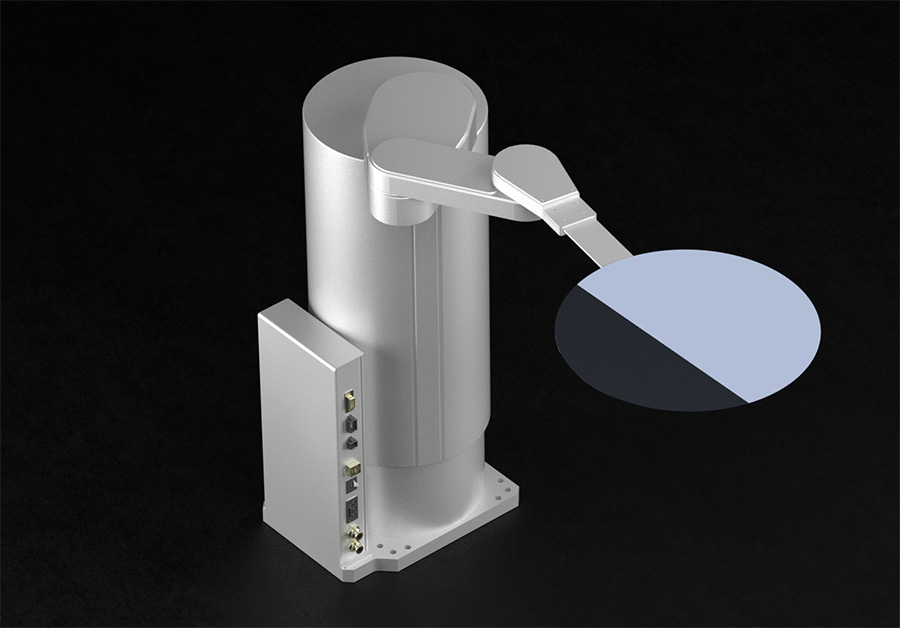
Atmospheric Robot
An atmospheric wafer robot is a robot used to transport wafers in a clean atmospheric environment. It is characterized by high precision and high efficiency, playing an irreplaceable role in semiconductor material handling.
In a clean production environment, atmospheric transfer robots can accurately and efficiently complete material handling tasks, effectively avoiding contamination and errors that manual operations may cause. Its unique docking technology ensures the stability and safety of materials during transfer, greatly improving production efficiency and product quality.
Vacuum Wafer Robot
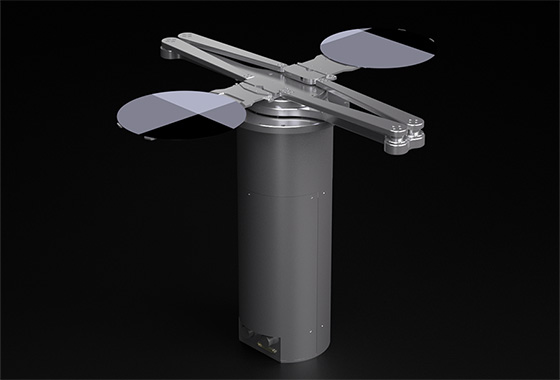
A vacuum robot is a robot that works in a vacuum environment, mainly used in the semiconductor industry to transfer wafers within vacuum chambers.
Wafer Workstation Composition
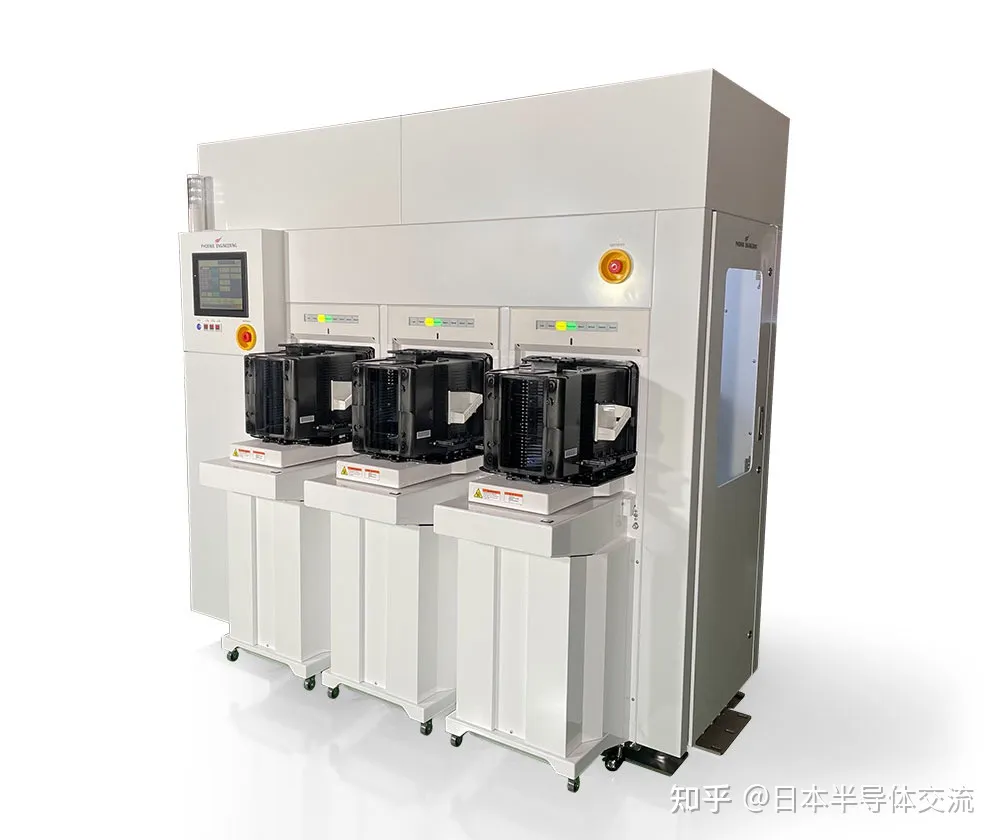
A wafer workstation consists of an EFEM (Equipment Front End Module), a wafer reorienter, and a FOUP (front opening unified pod).
The semiconductor equipment front end module (EFEM) is subordinate to semiconductor production equipment. Internally, it mainly consists of chemical vapor filters, air filters, ion generators, wafer transport robots, wafer alignment devices, wafer carriers, and automation control modules. Among them, the wafer loading system, wafer handling robot, and wafer alignment device are the three most core components.
A wafer sorter is process equipment used in the semiconductor manufacturing industry. Through the internal micro-environment of the equipment, it ensures the cleanliness requirements of the reorienting process, realizing wafer off-line, pre-process batching, post-process merging, inter-process reorienting control, and product outgoing inspection and sorting.
The FOUP is a container used in semiconductor processes to protect, transport, and store wafers, and is an important carrier for wafers.
INEXBOT Wafer Process Overview
INEXBOT has launched an advanced wafer handling solution, committed to building an efficient and stable wafer transport and processing system for the wafer market.
The wafer handling solution has the following features:
Automatic operation speed switching function: according to wafer inspection and wafer pick-up/drop-off area conditions, set operating speeds for action instructions separately. The host can set these speeds to any value up to each axis's maximum speed. During operation, according to the wafer holding state (detecting wafer presence via vacuum-type pressure sensors or wafer presence detection) or the operation type, the transfer speed is automatically changed in the controller.
Dual-wafer simultaneous operation: two wafers can be picked up or placed at the same time (provided the two blade types are identical and positions are the same).
Wafer protrusion detection function: in some special cases, wafers may protrude from the wafer cassette. If not detected, the wafer and blade may interfere with each other, and the wafer or blade may be damaged. The wafer protrusion detection function can be enabled/disabled by parameter selection of the mapping operation command.
Wafer mapping: after the manipulator moves to a specific position of the wafer cassette, it rises from that position and samples the elevation axis positions at which the mapping sensor turns on/off. By comparing the sampled data with calibration data, the wafer state (normal insertion, abnormal insertion) is determined, as shown in the figure below:

- Interlock function: the system has an interlock function that monitors various states to determine the validity of operations for safe operation.
Manipulator:
(1) With wafer: wafer transfer operations are prohibited, such as picking up another wafer / wafer protrusion detection is prohibited / wafer alignment is prohibited.
(2) Without wafer: wafer placement operations and transfer operations are prohibited. Aligner: without wafer — wafer alignment and calibration operations are prohibited.
At the same time, the INEXBOT wafer process is also characterized by fast pick-and-place, with a transfer efficiency of up to 200 times/hour. It can run continuously for 24 hours at high transport speed without power loss or wafer dropping, with excellent reliability.

INEXBOT Process Advantages
Adapts to various wafer robots; single-fork/double-fork, single-arm/double-arm robots can all use the system.
Self-developed system with built-in advanced vision detection algorithms, high precision and high reliability.
Can transport wafers of various sizes and specifications, meeting customers' diverse transport needs.
High transfer efficiency, up to 200 times per hour. Strong stability, low jitter, no wafer dropping.
Extremely high precision: the trajectory accuracy of the INEXBOT control system can reach within ±0.02mm, with a trajectory offset error of ±1.2mm.
Built-in safety control interface, controllable process, effective detection and avoidance of collisions and accidental injuries, improving workplace safety.
Automated Material Handling Display